What Is a Kitchen Faucet Aerator and How Do You Clean It?
A kitchen faucet aerator shapes the stream at the spout. Clean it when flow weakens or sprays unevenly; if you need a replacement, match its thread type and size to your faucet.
On this page (8 sections)
- What does a kitchen faucet aerator do?
- What signs point to a clogged aerator?
- How do you remove a kitchen faucet aerator?
- How do you clean and reinstall an aerator?
- How do you choose a replacement kitchen faucet aerator?
- What mistakes can make an aerator replacement fail?
- When should you clean the aerator, and when should you replace it?
- Which kitchen faucet aerator should you choose?
A kitchen faucet aerator is the small fitting at the end of the spout that shapes the water stream. If the stream weakens or sprays unevenly, cleaning the aerator is a sensible first step; a worn or mismatched part may need replacement.
Grit and mineral deposits can collect in the screen and restrict flow. The right fix depends on whether the aerator is clogged, damaged, or simply the wrong fit.
What does a kitchen faucet aerator do?
A kitchen faucet aerator shapes water as it passes through a small screen, helping create a more controlled stream. That can reduce splashing around the sink.
The screen can also collect small particles. If water flow is low at just one faucet, clean the aerator before taking apart the rest of the fixture.
An aerator doesn't control every water pressure problem. If hot and cold flow are both low, check other likely causes, such as a shutoff valve or supply line.
What signs point to a clogged aerator?
Low flow, an uneven stream, or extra splashing can point to a clogged aerator. Mineral deposits or debris may block some of the screen openings.
Watch the water as it leaves the spout. If it fans to one side or sputters with the handle fully open, remove and clean the aerator before doing more involved faucet work.
A drip after you turn the faucet off usually needs a different fix. See our guide to fixing a dripping kitchen faucet for other checks.
How do you remove a kitchen faucet aerator?
Most aerators unscrew from the spout, though access and thread style vary. Try turning it gently by hand first, using a cloth for grip to protect the finish.
Close the drain or cover it with a cloth before you start. Small parts can fall into the sink, and screens or washers need to go back in the same order.
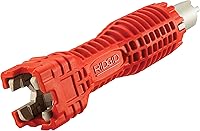
If the aerator won't turn, don't grip a finished surface with bare pliers. Check the faucet's care instructions or use a tool made for that aerator style.
Can a kitchen faucet aerator key help?
A removal key can help turn a recessed aerator that's hard to grip. The BBLFU set includes 5 removal wrenches and aerators in 4 metric sizes: M16.5, M18.5, M21.5, and M24 mm.
This kit suits someone who needs a matching metric size or wants several key options for removal. Measure the opening and check the thread style before using one of its replacement aerators.
Skip a multi-size kit if you already know the exact part your faucet needs. A wrench that doesn't fit can damage the aerator or spout, and a replacement from the set still needs the right dimensions.
How do you clean and reinstall an aerator?
Rinse away loose debris and gently brush the screen. Keep each piece in order so the aerator can go back together correctly.
- Remove the aerator and note how its parts are arranged.
- Rinse the parts under running water.
- Use a soft brush to loosen debris from the screen.
- Reassemble the parts and screw the aerator back by hand.
- Turn on the water and check whether the stream is even.
Avoid sharp tools that could tear the screen. For mineral deposits, follow the faucet maker's cleaning advice and use only a method it allows.
Turn on the water slowly after reinstalling. A steady stream without side spray suggests the aerator is seated; if it leaks around the edge, turn off the faucet and check that the washer is present and aligned.
How do you choose a replacement kitchen faucet aerator?
Match the thread style and size before choosing a replacement. Aerators may have male threads on the outside or female threads on the inside, and the spout determines which one fits.
Check the faucet manual, identify its model number, or take the old aerator with you when shopping. A replacement can look similar and still have incompatible threads.
Which male-thread kitchen faucet aerator fits?
A male-thread aerator screws into a spout opening with matching female threads. The Moen 3919 is made for select Moen kitchen faucets with male-thread openings.
Its 2.2 GPM flow rate suits everyday washing and cleaning when that flow is appropriate for your faucet. Choose it only after confirming the faucet model and thread fit; skip it if your spout needs a female-thread part or isn't a compatible Moen fixture.
Which female-thread kitchen faucet aerator fits?
A female-thread aerator fits a spout with matching male threads. The Moen 3924 is a 2.2 GPM option for compatible faucets.
Its chrome finish can suit a chrome spout, but finish is a secondary check. Confirm the faucet and thread size first, and skip this part if your spout has female threads or requires another model.
Is the Delta RP330 a fit for every Delta faucet?
No. The Delta RP330 is for compatible Classic kitchen and lavatory faucets with a specified thread configuration, so it isn't a universal fit for Delta spouts.
This is the clearest choice when you have a matching Classic faucet and can confirm its threads. Skip it if your faucet model or thread pattern is uncertain.
Our guide to kitchen sink faucet styles can help you identify the general style, while the model details determine part fit.
What mistakes can make an aerator replacement fail?
Choosing by brand, finish, or appearance alone is a common mistake. Thread direction, diameter, and faucet model all matter, so compare the old part or check the faucet documentation before ordering.
Don't force a part that catches after only a turn or two. Back it out and recheck the fit; forcing mismatched threads can damage the spout.
Overtightening is another avoidable problem. Hand-tighten the aerator, then check for a leak.
If water escapes around the edge, inspect the washer and reseat the part instead of adding more force.
When should you clean the aerator, and when should you replace it?
Clean an intact aerator when the stream is weak or uneven and debris may be blocking the screen. Replace it if it's cracked, damaged, still clogged after cleaning, or incompatible with the faucet.
If flow stays weak after cleaning, look for a partly closed shutoff valve or a kinked supply line. For work beyond the spout fitting, see how to install a kitchen faucet.
If the faucet moves at its base, an aerator won't solve the problem. Our guide to tightening a loose kitchen faucet covers the mounting hardware.
Which kitchen faucet aerator should you choose?
Choose by the faucet connection first, then decide whether cleaning or replacement makes sense. Keep an intact aerator and clean it if debris is the likely cause; replace a damaged part with one that matches the model and threads.
Pick the Moen 3919 for a compatible male-thread Moen kitchen faucet, the Moen 3924 for a compatible female-thread faucet, or the Delta RP330 for a matching Classic faucet. Choose the BBLFU set if you need removal keys and can confirm one of its metric sizes fits; skip the kit if you know the exact replacement part.
If you can't identify the thread style, remove the old aerator carefully and compare it before ordering. For another fit question at the base of the faucet, see our guide to kitchen faucet deck plates.
Frequently asked questions
What does a kitchen faucet aerator do?
A kitchen faucet aerator shapes the stream as water leaves the spout. Its screen can catch small particles, which may collect and restrict flow.
Aerators come in different thread styles and sizes, so a replacement needs to match the faucet.
How do you clean a faucet aerator without removing it?
Wipe visible debris from the spout opening and rinse it gently, but this may not remove buildup inside the aerator. For a deeper clean, remove the aerator if your faucet allows it, rinse its parts, and use a soft brush.
Follow the faucet maker's care instructions.
How often should you clean a kitchen faucet aerator?
Clean a kitchen faucet aerator when its stream weakens, sprays unevenly, or splashes more than usual. Mineral content and debris vary, so there is no single schedule that suits every home.
If flow problems return soon after cleaning, check the faucet and water supply for another cause.
How do you know what size faucet aerator to buy?
Check whether the aerator has male or female threads, then measure its diameter and identify the faucet model if you can. Take the old aerator to a hardware store if you need help matching it.
Brand and appearance alone don't confirm that a replacement will fit.