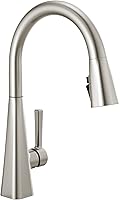
Kitchen Sink Faucets: A Plain Guide to Every Style
The right kitchen sink faucet fits your sink’s holes, reaches the work you do and has controls you can use comfortably. Measure first, then compare handle style, spout, sprayer and finish.
On this page (13 sections)
- What types of kitchen sink faucets are there?
- Which kitchen faucet handle style should you choose?
- What is the difference between pull-down and pull-out faucets?
- How do you know whether a kitchen faucet will fit?
- What spout height and reach work for your sink?
- Which spray options are useful on a kitchen sink faucet?
- What should you know about touch and touchless faucets?
- How do faucet finishes affect the choice?
- How do you compare kitchen faucet brands?
- How should you set up a new kitchen sink faucet?
- How do you care for a kitchen faucet and avoid common problems?
- What should you check before buying a kitchen sink faucet?
- How do you choose the right kitchen sink faucet?
The right kitchen sink faucet fits your sink’s holes, reaches the work you do and has controls you can use comfortably. Measure first, then compare handle style, spout, sprayer and finish.
A faucet can look right and still be awkward if its handle hits the backsplash or its stream misses the center of the basin. Start with the sink and counter measurements, then narrow the choices by how you wash, rinse and fill.
This guide covers the main styles, practical features and fit checks to help you choose. For brand-specific comparisons, see our guide to Moen, Delta, Kohler and Kraus kitchen faucet brands.
What types of kitchen sink faucets are there?
Kitchen faucets differ by how they mount, how you control water and how the sprayhead moves. Those choices affect compatibility and daily use, so compare them before focusing on finish or appearance.
| Style | What it does | Check before choosing |
|---|---|---|
| Single-handle | One lever controls water flow and temperature | Handle clearance and preferred control direction |
| Two-handle | Separate controls adjust hot and cold water | Deck space and handle-hole spacing |
| Pull-down | Sprayhead pulls down from the spout | Hose path and space under the sink |
| Pull-out | Sprayhead extends outward on a hose | Reach and hose movement |
| Side sprayer | Separate sprayer sits beside the faucet | Extra sink or counter hole |
| Touch or touchless | Water starts by touch or sensor, depending on model | Power needs and how activation works |
| Wall-mount | Faucet attaches through the wall above the sink | Plumbing position and wall construction |
A style name alone does not tell you whether a faucet will fit. Check the model’s mounting method, hole needs and dimensions against your sink and counter.
Think of the choice in three parts: the base and holes determine installation, the handle determines how you control water, and the spout or sprayer determines where water can reach. A faucet can do well in one area and still be a poor fit overall.
For many kitchens, a deck-mounted, single-handle faucet with an integrated sprayer is a practical starting point. A different setup may make more sense if you already have a side-sprayer hole, prefer separate hot and cold handles, or have plumbing connections in the wall.
Which kitchen faucet handle style should you choose?
Choose single-handle controls for one-lever adjustment or two-handle controls if you prefer separate hot and cold settings. Counter layout, reach and handle clearance matter as much as the control style.
A single lever may sit beside or in front of the spout, depending on the faucet. Make sure it can move through its full range without hitting a wall, backsplash or window frame.
Two handles need room on both sides of the spout. Measure the distance between mounting holes and leave enough space to turn each handle without striking nearby items.
A single handle can be easier when one hand is occupied or dirty. It also puts flow and temperature in one control, which some people find simpler.
The tradeoff is that the lever’s movement and placement must suit the counter around it.
Two handles give separate hot and cold controls. That layout can suit someone who prefers distinct adjustments or is replacing an existing two-handle faucet, but it needs the right hole pattern and more deck space.
If you’re weighing both options in more detail, read our comparison of single-handle and two-handle kitchen faucets.
What is the difference between pull-down and pull-out faucets?
A pull-down faucet has a sprayhead that moves down into the sink, while a pull-out faucet’s sprayhead extends outward from the spout. Either can make rinsing and filling easier than using a fixed stream alone.
A pull-down model can suit a deeper basin where you want to direct water down toward dishes. A pull-out design can give you a longer reach toward a nearby pot or the edge of a wide sink.
The names describe the sprayhead’s movement, but the useful question is where you need water to go. Imagine rinsing the far corners of the basin and washing a colander.
Consider whether you need to fill a pot that does not fit beneath the spout. Choose the hose movement that makes those tasks easy without pulling the hose against cabinet items.
Look at the hose route under the sink, too. A hose weight may help a pull-down sprayhead retract, but the cabinet needs room for the hose to move freely.
Our guide explains when a pull-down faucet needs a hose weight.
Should you choose a separate side sprayer?
A separate side sprayer gives you a second control and a sprayhead placed beside the faucet. It can suit a sink that already has a dedicated opening and a household that prefers to handle the sprayer separately.
That setup takes deck space and needs a compatible opening. If you want the sprayhead built into the faucet, compare kitchen faucets with sprayers.
How do you know whether a kitchen faucet will fit?
A kitchen faucet fits when its mounting pattern, spout dimensions and handle clearance work with your sink and counter. Count the holes and measure before comparing models.
- Count the holes in the sink or countertop.
- Measure the distance between holes, center to center.
- Measure from the faucet hole to the backsplash or wall.
- Check faucet height and reach against the sink basin and any cabinets above.
- Confirm there is room under the sink for hoses and connections.
Some faucets use a deck plate to cover unused holes, while others install through a single hole. A deck plate does not change where the faucet mounts, so confirm that it covers the openings you need.
Learn what a kitchen faucet deck plate does.
For a one-hole setup, check the hole size and nearby clearance. Our single-hole kitchen faucet guide explains the main fit questions.
A common mistake is counting the holes but skipping their spacing. On a sink with several openings, measure from the center of one hole to the center of the next, then compare that distance with the faucet’s installation instructions.
Also check the area below the counter. Supply lines and a pull-down hose with its weight need room to move and connect.
A crowded cabinet can limit hose movement or make future access harder, even when the faucet fits on top.
If the sink is an apron-front or farmhouse style, consider how far the faucet must reach and where its handle can sit. Our guide to choosing a faucet for a farmhouse sink covers those layout questions.
What spout height and reach work for your sink?
Choose a spout with enough height to fill the containers you use and enough reach to cover the basin. A tall arch can provide room for large pots, but it may not suit every cabinet or window.
Spout reach is the distance from the faucet base to where water flows. If it is too short, the stream may land near the back or side of the sink.
If it is too long, it may land too close to the front edge.
Measure from the faucet hole to the center of the basin. Compare that with the faucet’s spout reach, and check that the handle and spout clear nearby walls and cabinets.
A swivel spout can direct water across more of the sink. Confirm its rotation fits your counter layout and does not swing into a wall or another fixture.
Measure the tallest pot or pitcher you commonly fill, too. Leave room to place it under the spout and angle it for removal.
A high spout can help with that task, but only if overhead cabinets and shelves leave enough space.
Basin shape affects reach. A deep single bowl offers room to move the sprayhead around, while a divided sink may require a spout that can direct water to both sides.
The stream should land inside the basin during normal use, not on the divider or counter.
Which spray options are useful on a kitchen sink faucet?
A sprayhead is useful when it lets you direct water around the basin or across dishes. Common options include a steady stream and one or more spray patterns, though the controls vary by faucet.
Some models switch spray patterns with a button on the sprayhead. Others have a separate side sprayer.
Check whether the sprayhead returns to its dock and whether the hose can reach the areas you wash most.
Think about what you rinse frequently. A broad spray can cover more of a basin, while a steady stream can be convenient for filling.
A movable sprayhead also lets you aim water at a dish or sink corner instead of moving the item under a fixed spout.
The four pull-down faucets below offer different combinations of spray control, docking, finish and spout design. Choose based on the feature you will use and the physical fit in your kitchen.
The Moen Haelyn is a sensible fit if you want a pull-down faucet and soap dispenser together. Skip it if you do not need a dispenser or if its mounting layout and dimensions do not suit your sink.
The Delta Finnridge is a strong choice when a wide fan spray and a wand that docks magnetically are priorities. Its included deck plate supports a single-hole or three-hole, 8 in center installation; check your sink pattern before choosing it.
The Kohler Simplice suits someone who wants to switch among a steady stream, wide Sweep spray and Boost flow. Its high-arch spout and 360-degree swivel favor a sink where that reach is useful, while its feature set may be more than you need if you only want a basic stream and lever.
The Kraus Bolden fits a kitchen where an open-coil commercial look is welcome and a 180-degree swivel suits the sink. Its 18 3/4 in overall height can conflict with low cabinets, so measure overhead clearance before considering it.
What should you know about touch and touchless faucets?
Touch and touchless faucets can start water without using a standard handle every time, but their activation methods differ by model. Touch models respond to contact, while touchless models use a sensor to detect movement.
These features can help when your hands are busy, but they add setup details to check. Confirm how the faucet is powered, how you adjust temperature and whether you can operate it normally if the sensor or power is unavailable.
Think about the location of the sensor or touch area relative to your normal work. A faucet that turns on when you do not intend it to can interrupt food preparation.
One that is hard to reach may not save effort. Follow the model’s setup directions and learn the manual control before relying on the feature.
Read our guide to touch vs. touchless kitchen faucets before choosing a hands-free style. For brand-specific systems, see how Delta Touch2O faucets work and how Moen MotionSense faucets work.
How do faucet finishes affect the choice?
Finish affects the faucet’s color and surface appearance, while fit and function depend on its dimensions and installation. Choose a finish that works with the rest of your kitchen, then follow the care instructions for that faucet.
Stainless and brushed nickel can look similar in photos, but the names do not guarantee a match across brands. Compare samples in your kitchen’s lighting if matching nearby hardware matters.
Bronze and other darker finishes can create a stronger contrast with a light sink or counter. For finish-specific comparisons, see our guides to stainless steel vs. brushed nickel, brushed nickel faucets and bronze faucets.
Care is part of the finish decision. Wipe away water and soap residue with a soft cloth, and avoid abrasive cleaners unless the manufacturer says they are safe for that finish.
A spot-resistant or spot-free surface may reduce visible marks, but regular gentle cleaning still helps keep the faucet looking tidy.
How do you compare kitchen faucet brands?
Compare brands by the features you need, the models that fit your sink and the support details for the specific faucet. A brand name alone does not tell you which model suits your kitchen.
Check the installation method, included parts, spray controls and warranty terms for each model. A brand may offer several styles and finishes, so compare the model details rather than assuming they are the same across its range.
Our kitchen faucet brands comparison covers Moen, Delta, Kohler and Kraus. You can also compare Moen and Kohler kitchen faucets if those are your leading options.
Warranty terms are worth reading, but they should not replace a fit check. A faucet with a long warranty can still be wrong for a shallow cabinet, an unusual hole pattern or a handle that cannot move past the backsplash.
How should you set up a new kitchen sink faucet?
A good setup starts with checking the instructions, shutoff valves, mounting holes and connections before the faucet goes in. If the existing faucet is being replaced, clear the cabinet and make sure you can reach the supply valves and mounting hardware.
Before installation, compare the parts in the box with the instructions. Confirm whether a deck plate is needed and whether supply lines are included.
Check that your shutoff valves match the connections. Do not assume all faucets use the same fittings.
Keep the cabinet area clear so the hose and any weight can move without catching on stored items. After installation, run water and inspect the connections for leaks, then move the sprayhead through its full range and make sure it returns to its dock.
If you are installing the faucet yourself, follow the model’s instructions step by step. Our guide to installing a kitchen faucet explains the general process and common preparation steps.
How do you care for a kitchen faucet and avoid common problems?
Routine care is simple: wipe the faucet with a soft cloth, clear mineral buildup gently and keep the hose path unobstructed. Follow the specific care directions for the finish and sprayhead.
Do not scrub a finish with abrasive pads or harsh cleaners unless the manufacturer permits them. Mineral deposits at the spray face can affect the water pattern, so clean the nozzles using the method recommended for that faucet.
If flow becomes uneven, check whether debris or mineral buildup is blocking the aerator or spray face. Our guide explains what a kitchen faucet aerator does and how to clean it.
A hose that catches on stored items may not retract smoothly. Keep the travel path clear and avoid hanging items where they can snag the hose or weight.
If the faucet handle loosens, address it before continued movement strains the mounting hardware; see how to tighten a loose kitchen faucet.
A drip at the spout can have several causes and may need a repair suited to the faucet’s valve design. Use our guide to fixing a dripping kitchen faucet to narrow down the next step.
What should you check before buying a kitchen sink faucet?
Before buying, confirm fit, reach, clearance, controls and installation needs. These checks reduce the chance of choosing a faucet that looks right but conflicts with your sink or counter.
- Match the faucet’s mounting method to your sink or countertop.
- Confirm hole count and spacing, including whether a deck plate is included or needed.
- Measure spout height and reach against your sink and cabinets.
- Check handle movement near walls, backsplash and windows.
- Decide whether you want a pull-down, pull-out or separate sprayer.
- Check installation instructions and the parts included with the model.
- Review the faucet’s warranty and care instructions.
- Make sure the hose and connections have room under the sink.
A frequent mistake is treating a deck plate as a solution to every hole mismatch. It may cover unused openings, but it cannot move the faucet’s mounting point or make a poorly placed spout reach the basin center.
Another mistake is choosing a tall faucet based only on how much room it gives pots. Check the space above the sink as well as the basin below.
A faucet that touches a cabinet or blocks a window can make routine use awkward.
Do not choose by finish photo alone. Finishes can vary between brands and lighting, so check samples if a close match matters.
Decide on fit and daily function first, then choose the color you prefer.
How do you choose the right kitchen sink faucet?
Choose a kitchen sink faucet by starting with fit, then choosing the controls and spray style that match your routine. Measure the sink holes, basin and clearances before settling on a finish.
Pick a pull-down or pull-out model if bringing the sprayhead to dishes and sink corners would help. Choose separate handles if you want distinct hot and cold controls, or a single lever if one control is simpler for you.
From the four featured options, choose the Moen Haelyn when an included soap dispenser is useful, the Delta Finnridge when a wide fan spray and magnetic docking matter, the Kohler Simplice for three spray choices, or the Kraus Bolden for an open-coil commercial look. Skip any model whose dimensions, installation pattern or clearance do not match your kitchen.
If your needs are more specific, compare kitchen faucets with soap dispensers or review our kitchen faucet brand comparison before making a shortlist.
Frequently asked questions
How do I choose a kitchen sink faucet?
Start with your sink’s hole pattern and the space behind it, then choose a handle and spray style that suit your routine. Check spout reach and height against your sink and cabinets.
Finish comes after fit and function because it cannot make an incompatible faucet work.
What is the difference between pull-down and pull-out faucets?
A pull-down sprayhead moves down from the spout, while a pull-out sprayhead extends outward on a hose. Both can bring water closer to dishes and the sink.
Compare the hose movement and available clearance with your sink before deciding which style feels practical.
Do kitchen faucets fit every sink?
No. Faucets have different mounting and hole requirements, and the handle or spout can be blocked by a backsplash or window.
Count the holes, measure their spacing and check the faucet’s installation instructions before buying.
An optional deck plate can cover extra holes on some models.
Is a single-handle or two-handle kitchen faucet better?
A single-handle faucet adjusts flow and temperature with one control, while a two-handle faucet has separate hot and cold controls. Choose based on the motion you prefer and the available deck space.
Check handle clearance, especially if a wall or backsplash is close behind the faucet.
What does a kitchen faucet sprayer do?
A sprayer directs water where you need it to rinse dishes, reach sink corners or wash the basin. It may be built into the spout as a pull-down or pull-out sprayhead, or mounted separately beside the faucet.
Match the spray style to your sink and daily tasks.