Which Kitchen Faucet Works With a Farmhouse Sink?
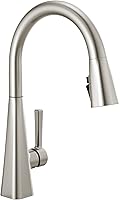
A high-arc faucet with enough reach for the bowl is a practical fit for many farmhouse sinks. Check whether it mounts to the sink or counter, count the available holes, and compare spout reach and height with the sink before choosing.
On this page (6 sections)
- What kitchen faucet for a farmhouse sink should you choose?
- Does a farmhouse sink need a special faucet?
- Which faucet features help with a deep farmhouse basin?
- How should the faucet finish match a farmhouse sink?
- What should you check before installing the faucet?
- How do you choose the right farmhouse sink faucet?
A high-arc kitchen faucet with enough reach for the bowl works well with many farmhouse sinks. Check the mounting surface and hole layout first, since apron-front sinks vary and some faucets mount to the counter rather than the sink itself.
The sink's deep, wide basin also makes reach and clearance worth checking. A faucet that looks tall may still send water too close to the back or side wall if its spout does not extend far enough.
For a broader overview of faucet shapes and controls, see our plain guide to kitchen sink faucets. The right match depends on the sink and counter measurements, not the farmhouse label alone.
What kitchen faucet for a farmhouse sink should you choose?
Choose a faucet with a spout height and reach that suit your bowl, then confirm the mount and holes match your installation. A high arc can make it easier to place tall pots under the spout, while a pull-down sprayer can help rinse across the basin.
Measure from the faucet's planned mounting point to the areas you need to reach. Consider where the water stream will land, and whether the handle can move freely without hitting a wall, window trim or backsplash.
A pull-down head gives you a movable spray for rinsing the sink and dishes. If you prefer a separate sprayer or need extra deck openings for accessories, compare a side-sprayer layout as well.
How do you measure for a kitchen faucet on a farmhouse sink?
Measure the bowl, faucet holes and mounting surface before choosing a model. Farmhouse sinks can have different deck arrangements, and the faucet may install through the countertop behind the sink.
Use a tape measure to check:
- The distance from the faucet mounting point to the center of the bowl.
- The bowl's width and depth, including any divider.
- The available vertical clearance beneath cabinets or windows.
- The number and spacing of existing holes.
- The space under the counter for hoses, weights and connections.
A faucet's overall height does not tell you how far the spout reaches into the bowl. Check both measurements, plus the handle's movement, to avoid a setup that feels cramped.
If you have one faucet opening and want a single-handle style, our guide to single-hole kitchen faucets explains what to check. A faucet that needs more openings may still work if your counter can be drilled appropriately.
Does a farmhouse sink need a special faucet?
A farmhouse sink does not automatically require a special faucet. The key is matching the faucet's mounting method, hole count and spout dimensions to the sink and counter.
Many faucets mount on the countertop behind the basin. This can be useful when the sink itself has no faucet deck, but you still need enough counter depth and clearance for the faucet and its handle.
Some sinks include a rear ledge or deck with faucet holes. Confirm the hole spacing and configuration before ordering, especially if the faucet includes separate handles, a soap dispenser or a side sprayer.
An optional deck plate can cover unused holes on some faucets. It cannot change a faucet's required spacing or solve a reach problem.
See our guide to kitchen faucet deck plates for help deciding when one is useful.
Which faucet features help with a deep farmhouse basin?
A pull-down or side sprayer can make a deep basin easier to rinse because you can direct water around the bowl. A high-arc spout can also provide room beneath it for larger pots.
The best layout depends on what you wash most often. A pull-down spray head stays attached to the faucet, while a side sprayer sits separately on the counter or sink deck.
Look for a spout that reaches the center of the bowl. If it sits too far back, water may splash against the rear wall; if it reaches too far forward, it can be awkward to fill a pot near the back.
Is a pull-down or side sprayer better for a farmhouse sink?
A pull-down sprayer suits a setup where you want the spray head built into the main faucet. A side sprayer may fit better if you prefer a separate hose or your existing sink and counter already have an extra opening.
The Moen Adler High Arc (Chrome) combines a pull-down sprayer with an optional deck plate for three-hole installations. Its Reflex system is designed for smooth operation and secure docking, and the faucet mounts to a sink or countertop.
The Moen Brantford Pulldown (Stainless) includes an escutcheon and is designed for 1- or 3-hole installation. Moen says its Spot Resist Stainless finish resists fingerprints and water spots.
The Moen Edison High Arc (87042SRS) includes a side sprayer and soap dispenser. It is designed for 3- or 4-hole installations, so it may suit a deck or counter laid out for those accessories.
The Pfister Hanover 2-Handle Pulldown with Soap Dispenser has a high-arc spout, a pull-down sprayer and a coordinating soap dispenser. It is designed for a 3- or 4-hole countertop installation, so confirm the spacing and openings before choosing it.
How should the faucet finish match a farmhouse sink?
Choose a finish that works with the room's other hardware and the sink's overall look. Chrome can bring a bright, reflective surface, while stainless finishes can coordinate with stainless appliances and accessories.
A farmhouse sink can be a visual focal point, so consider whether you want the faucet to blend in or stand out. Match the finish to nearby cabinet pulls, lighting and appliance handles where possible.
Finish names can vary between brands. Compare the faucet's actual finish description with the hardware you already have, and avoid assuming that two finishes called “stainless” will look identical.
For finish comparisons and other options, browse our brushed nickel kitchen faucet guide and bronze kitchen faucet guide.
What should you check before installing the faucet?
Check the hole pattern, counter thickness, handle clearance and under-sink space before installation. A faucet that fits the sink visually may still need a different opening layout or more room for its hoses.
Read the installation instructions for the model you choose. Confirm whether the faucet uses a deck plate, what fittings it includes and whether any separate accessories need additional holes.
Under the sink, check for obstructions that could interfere with a pull-down hose or its weight. Leave room for the spray head to retract and dock without catching on stored items or plumbing.
If you're replacing an existing fixture, compare its mounting arrangement before removing it. Our kitchen faucet installation guide covers the general steps, while the faucet's own instructions should guide its specific connections.
How do you choose the right farmhouse sink faucet?
Choose by measuring first, then matching reach, mounting and hole count. A high arc and a movable sprayer can help with a deep bowl, but the faucet still needs to fit your counter and daily routine.
Pick a pull-down model if you want the spray head attached to the faucet. Choose a side-sprayer layout if you prefer a separate hose and have the extra opening.
For more styles and layouts, start with our kitchen sink faucet guide.
Sources
Frequently asked questions
What type of faucet works best with a farmhouse sink?
A high-arc faucet with suitable spout reach is a practical starting point for many farmhouse sinks. Match its mounting style and hole layout to the sink or counter, then check the spout height and reach against the bowl so you can fill pots and rinse without the stream landing too close to an edge.
Can a regular kitchen faucet fit a farmhouse sink?
Often, yes, if the faucet mounts to the counter or sink deck and its holes, reach and height suit the installation. Farmhouse sinks vary, so measure the bowl and check the faucet's installation requirements instead of relying on the sink style alone.
Should a farmhouse sink faucet have a pull-down sprayer?
A pull-down sprayer can help you rinse across a broad or deep bowl because the spray head moves away from the spout. Check the hose path and docking clearance under the sink, and choose a separate side sprayer if your preferred faucet layout uses one.
How many holes does a farmhouse sink faucet need?
The required hole count depends on the faucet and accessories. A single-handle faucet may use one hole, while separate handles, a soap dispenser or a side sprayer can need extra openings; check the faucet's installation options and your sink or counter before buying.