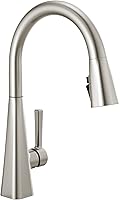
Single-Handle vs Two-Handle Kitchen Faucets: Which Is Better? (October 2026)
Choose a single-handle faucet for quick one-handed temperature control, or a two-handle faucet for separate hot and cold controls. Your sink holes, preferred style and sprayer setup can decide which fits better.
On this page (9 sections)
- Single handle vs double handle kitchen faucet: what is the main difference?
- Which faucet style fits your sink holes?
- Which sprayer style should you choose?
- Which style gives you more control over temperature?
- Which style is easier to keep clean?
- How do the Moen, Delta and Pfister options compare?
- Which faucet should you choose?
- How we scored these faucet options
- Frequently asked questions
A single-handle faucet gives you one-lever control, while a two-handle faucet separates hot and cold adjustments. In a single handle vs double handle kitchen faucet comparison, sink-hole fit, sprayer style and daily habits help you choose.
A single handle combines flow and temperature control in one lever. Two handles let you adjust hot and cold water separately, which some people prefer for a familiar setup.
The Moen Wetherly represents a single-handle option with a separate side spray. The Delta Windemere and Pfister Hanover have two handles, with different sprayer styles and sink-hole arrangements.
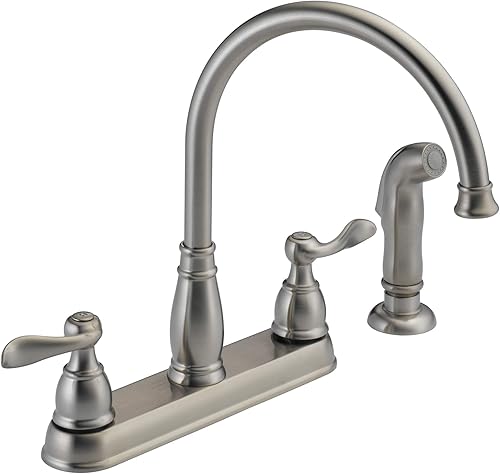 Best for classic separate controls
Delta Windemere Side Spray (Brushed Nickel)
 Best for an integrated pull-down
Pfister Hanover 2-Handle Pulldown with Soap Dispenser
Single handle vs double handle kitchen faucet: what is the main difference?
A single-handle faucet uses one control for water flow and temperature; a two-handle faucet gives hot and cold water their own controls. Decide which motion feels natural for your usual kitchen tasks.
With one lever, you can turn on water and adjust temperature with one hand. That can be convenient when your other hand is holding a pot or dish.
With two handles, you adjust each side separately. This gives you distinct controls and may take more than one movement to set a temperature.
How does the control feel in daily use?
A single handle lets you make one continuous adjustment. If you often turn on the faucet briefly while cooking or cleaning, one control may feel simpler.
Two handles suit people who like independent hot and cold settings. The Delta Windemere has sculpted curves that suit a traditional kitchen.
Neither arrangement is automatically easier for everyone. Consider who uses the sink, whether they can reach the controls comfortably, and how much counter space is available around the faucet.
Which faucet style fits your sink holes?
Match the faucet's hole requirements to the openings in your sink or countertop before you choose a style. Handle count alone doesn't tell you the full installation layout.
The Delta Windemere fits a 4-hole, 8-inch center installation. The Pfister Hanover is designed for 3- or 4-hole installation, while the Moen Wetherly can use a 2-hole setup without the deckplate or a 4-hole setup with the included deckplate and side spray.
Measure the distance between openings as well as the number of holes. A faucet may have the right count but still not match the spacing.
If you have one opening, compare it with single-hole kitchen faucets and check whether a deck plate can cover unused holes. Our guide to kitchen faucet deck plates explains how they can cover extra sink openings.
What if you are replacing an existing faucet?
Use the current faucet as a starting point, then verify the sink openings and spacing. A new handle arrangement can require a different configuration, and a separate sprayer or soap dispenser may use an extra hole.
Don't assume an included deck plate will cover every sink layout. Check the plate dimensions and the distance between the outer openings before buying.
For replacement steps and preparation, see how to install a kitchen faucet. If the faucet is already loose at the base, the guide to tightening a loose kitchen faucet can help you identify that separate problem.
Which sprayer style should you choose?
Choose a separate side spray if you want a distinct sprayer beside the faucet, or a pull-down spray if you want the spray head integrated into the spout. Either style can work with single- or two-handle controls.
A side spray sits in its own sink opening and has a separate handle. It gives you flexible reach for rinsing dishes and sink corners, but it uses deck space and needs an additional hole.
A pull-down spray head docks into the faucet spout. It keeps the spray head in one assembly and can make it easier to direct water around the sink.
The Moen Wetherly has one handle and a separate side spray. The Delta Windemere has two handles with a separate side sprayer, while the Pfister Hanover has two handles and a pull-down head.
Does a separate sprayer change the hole count?
Yes, a separate side spray needs its own opening. The faucet, handles and spray can each occupy a hole, so check the full arrangement rather than counting only the main faucet.
The Moen Wetherly offers a 2-hole installation without the deckplate or a 4-hole setup with the deckplate and side spray. For more spray options, compare kitchen faucets with sprayers and match each model's installation needs to your sink.
Which style gives you more control over temperature?
A two-handle faucet gives you separate hot and cold controls, while a single-handle faucet lets you set both with one lever. Choose based on how you prefer to adjust water, not on a promise of more precise results.
Separate handles make it clear which side controls hot and which controls cold. You can move one handle at a time, then adjust the other to reach a comfortable temperature.
A single lever changes temperature as you move it through its range. The exact direction and movement depend on the faucet, so check the handle design and installation instructions.
Households with children or guests may prefer controls that are easy to understand at a glance. Consider where the lever or handles sit and whether someone could bump them while working at the sink.
Which style is easier to keep clean?
A one-handle faucet has fewer separate controls on the sink deck, while a two-handle faucet gives you more surfaces around the base to wipe. The overall shape and finish also affect routine cleaning.
Both styles need regular wiping around the spout base and handle joints. Food splashes and mineral deposits can collect in those areas regardless of handle count.
A separate side spray adds a holder and hose to the sink area. A pull-down faucet keeps the spray head on the spout, though the hose also needs room beneath the sink.
Choose the layout you can reach and clean without moving items you keep around the sink. Follow the brand's care directions for the finish.
How do the Moen, Delta and Pfister options compare?
The Delta and Pfister offer two-handle control, while the Moen offers one-handle control. Their installation requirements and sprayer setups are useful differences to compare.
| Faucet | Handles | Sprayer | Installation |
|---|---|---|---|
| Delta Windemere Side Spray | Two | Separate side sprayer | 4-hole, 8-inch center |
| Pfister Hanover 2-Handle Pulldown with Soap Dispenser | Two | Pull-down | 3- or 4-hole |
| Moen Wetherly High Arc | Single | Separate side spray | 2-hole without deckplate or 4-hole with deckplate and side spray |
The Wetherly's high-arc spout provides added clearance for filling large pots. Its Spot Resist Stainless finish helps resist fingerprints and water spots.
The Windemere has separate controls and a side spray. Its 4-hole, 8-inch center configuration is a fit to verify with your sink.
The Hanover combines two handles with a pull-down spray head and a soap dispenser. It suits a shopper who wants those features in a multi-hole setup.
Which faucet should you choose?
Pick a two-handle faucet if separate hot and cold controls matter more, or choose a single-handle faucet if one-lever adjustment suits your routine. Then confirm the sink openings, spacing and spray style.
Choose the Delta Windemere for a traditional two-handle setup with a separate sprayer and a 4-hole, 8-inch center sink. Choose the Pfister Hanover if you want two handles with an integrated pull-down sprayer and soap dispenser.
Choose the Moen Wetherly if you want a single lever with a side spray and your sink can use its 2-hole or 4-hole arrangement. If you are still comparing overall faucet shapes, start with our plain guide to kitchen sink faucet styles.
How we scored these faucet options
Our scores weigh the features and specifications against the needs of shoppers comparing handle styles. The Delta scores highest for this comparison, followed by the Pfister and then the Moen.
Scores reflect suitability for this comparison. Check each faucet's installation configuration and dimensions for your sink before you order.
Frequently asked questions
Is a single-handle kitchen faucet better than a two-handle faucet?
A single-handle faucet suits one-handed adjustments, while a two-handle faucet suits people who want separate hot and cold controls. Neither style fits every kitchen or user.
Compare the control motion you prefer, the available deck space and your sink's hole layout before choosing.
Can a single-handle faucet go on a 3-hole sink?
It may fit if the faucet includes or supports a deck plate that covers the extra openings. Installation options vary by model, and a separate side spray or soap dispenser can use another hole.
Measure the openings and spacing, then confirm the faucet's exact configuration.
Are two-handle faucets harder to install?
The handle count alone doesn't determine how difficult installation will be. A two-handle faucet may have separate handle assemblies and need a specific hole arrangement, while a single-handle model can also include a side spray.
Follow the installation instructions and check access below the sink before starting.
Which style works better with a side sprayer?
Both styles can pair with a separate side sprayer. The Moen Wetherly has one handle and a side spray, and the Delta Windemere pairs a side spray with two handles.
Confirm the sink has the openings needed for the faucet and the separate sprayer.
Does a pull-down faucet require a separate sprayer hole?
No. A pull-down spray head is part of the faucet assembly rather than a separate sprayer placed in its own sink opening.
The Pfister Hanover combines a pull-down head with two handles and is designed for a 3- or 4-hole installation, so verify your sink layout.
Frequently asked questions
Is a single-handle kitchen faucet easier to use?
A single-handle faucet is often easier when you want to adjust water with one hand. You move one lever to change flow and temperature, while a two-handle faucet has separate hot and cold controls.
Try the motion you prefer and check that the handle has room to move beside a wall or backsplash.
Does a two-handle faucet use more sink holes?
Many two-handle models use separate openings for the spout and handles, but hole needs vary by faucet. The Delta Windemere requires a 4-hole, 8-inch center installation, while the Pfister Hanover is designed for 3 or 4 holes.
Count and measure your sink openings before choosing.
Can you replace a two-handle faucet with a single-handle faucet?
You may be able to, but the new faucet must work with your sink's holes or cover unused openings with a compatible deck plate. Check the faucet's installation options and your sink layout first.
A separate sprayer or soap dispenser can also affect how many holes you need.
Which faucet style is easier to clean?
Cleaning depends more on the faucet's shape and finish than on whether it has one handle or two. A single handle has fewer controls on the deck, while separate handles add surfaces around the spout.
Wipe around the base and handles regularly, and follow the finish care instructions.
Can both styles have a sprayer?
Yes. A single-handle faucet can pair with a separate side spray, as the Moen Wetherly does, and a two-handle faucet can have either a side sprayer or a pull-down spray head.
Choose the spray style you prefer, then confirm the sink has the needed openings.